
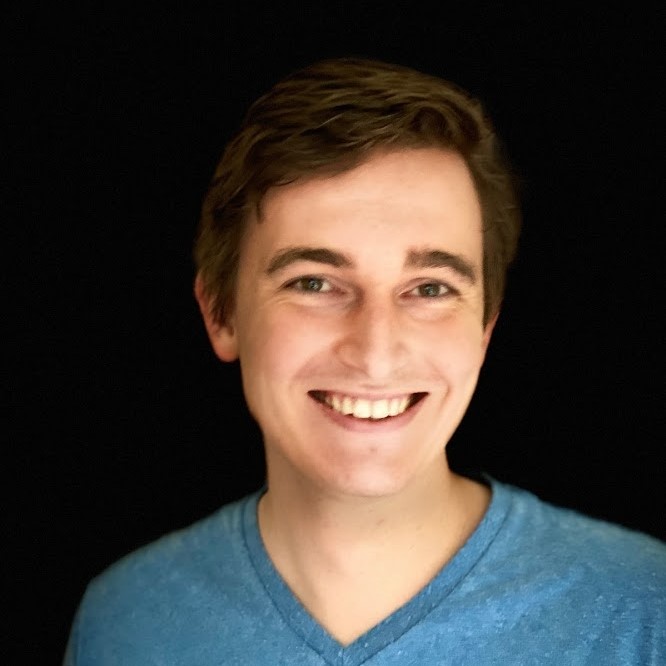
Hello, GYMES!
My name is Ľubo Ohman. I come from Geča, I am 29 years old, and I studied at GYMES between 2005 and 2013. Our class was historically the second one to be opened at the school, at that time still in Košická Nová Ves. Over the entire eight years we had, surprisingly, only two class teachers, both of whom still teach here today. For the first five years our class teacher was Magdaléna Iľková (then Palaščáková), and for the final three years it was Zuzana Trail. After graduating, I studied computer science at the Faculty of Mathematics and Physics in Prague, and for one semester I also spent time at the University of Padua in Italy. After finishing my studies I started working at Microsoft as a Software Engineer, and I have remained there ever since. It has now been almost seven years. After one year in the Czech branch, I accepted an offer in 2019 to take up a position in the United States. I am happy to share my experience, and anyone who is interested can find me on LinkedIn (Ľubomír Ohman | LinkedIn). As for my personal life, I have a wonderful wife who has always supported me in all my career goals and an adorable three-year-old daughter. During my life I have lived in different countries and met many diverse people. I believe that respect, tolerance and sincerity are the key to good relationships, regardless of human diversity.
How did you perceive the atmosphere at school during your studies?
The atmosphere was very close-knit, which was due to the small size of the school in its early years. Quite literally everyone knew everyone. This applied to students, teachers and non-teaching staff alike. Naturally, this changed somewhat over the eight years, but relationships with people remained positive throughout.
Was there any teacher at GYMES who inspired you or significantly influenced you? Almost until the end of the seventh year, I neglected physics. I made sure that I had at least a B on my report card, but otherwise it did not interest me very much. The physics teacher was quite unhappy about this because she saw potential in me and was worried that I was wasting it. Towards the end of the year, when the time came to choose subjects for the leaving examination, I hesitated over the fourth subject. In the end I went to the physics teacher and asked her what she thought about me taking the physics exam. I received great encouragement and subsequently a great deal of help throughout the final year. She was the first person who showed me the “Matfyz” approach to learning. Why memorise something when we can derive or prove it? That teacher was Mária Lukáčová, to whom I am very grateful. I would warmly recommend to all future students interested in technical fields that they take advantage of having a person of this calibre at the school.
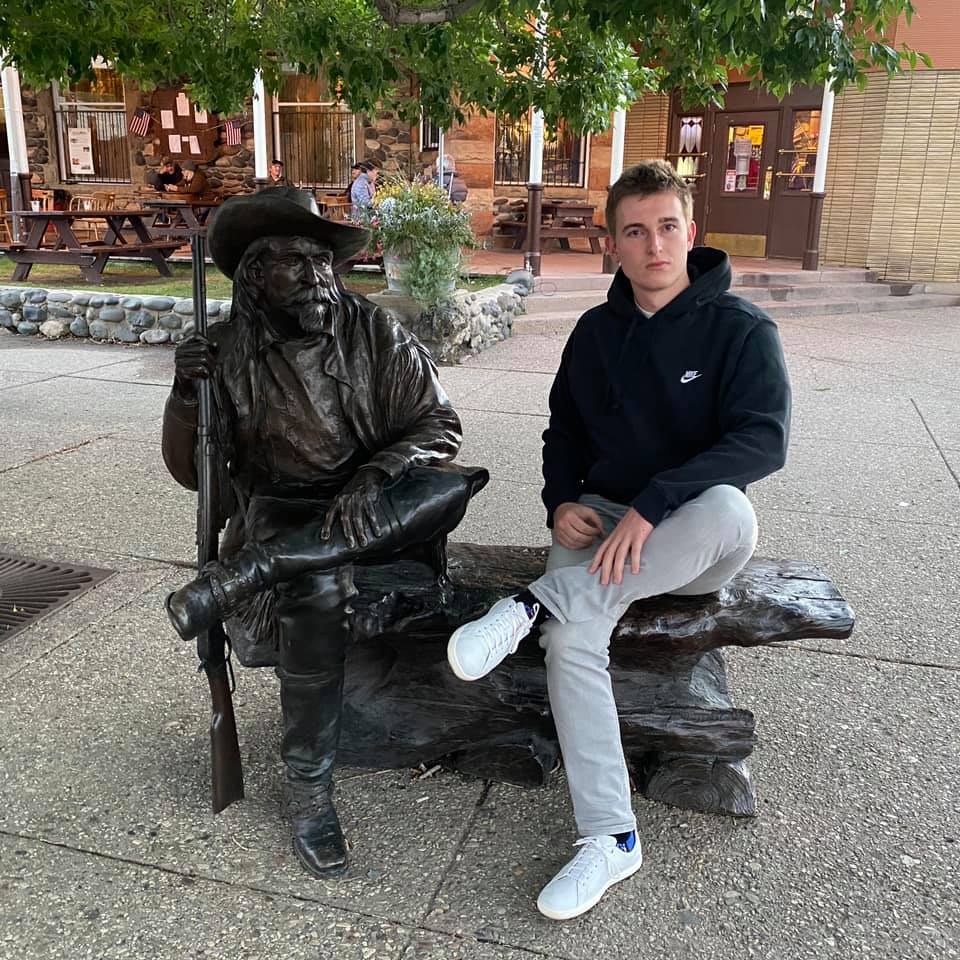
Which moment at school do you consider a turning point for your personal or professional development? Without a doubt, the decision to study at Matfyz. When I was seventeen, I would never have believed that within a few years I would have the opportunity to work in the United States for one of the world’s technological giants. That would not have been possible without quality education that opened an enormous number of opportunities for me. Technology constantly evolves, but critical thinking remains relevant in every era and profession. It may sound like a cliché, but Matfyz teaches you how to think. It is difficult and sometimes painful, but the result is worth it.
Have any of your friendships from GYMES lasted until today?
Yes. Many people from my class are now scattered around the world, but whenever I am in Slovakia I try to meet several good friends from GYMES.
How did you choose your seminars and future direction at GYMES?
Throughout my childhood my father emphasised that I should not only study but also choose a field with good career prospects. I am still grateful for that advice and I followed it. I knew that I was good at mathematics, and programming attracted me even though I knew nothing about it at the time. I started looking up university rankings and graduate employment prospects online. From my small research it seemed that the Faculty of Mathematics and Physics in Prague was the best school in our region, so I chose the subjects that I thought would prepare me for it best. Incidentally, my father is now your school caretaker, so listen to him. Perhaps he will give you some useful advice as well.

How did GYMES prepare you for life beyond the classroom? What did you feel was missing or what would you have liked to learn more about?
GYMES has always been very strong in languages, which is probably connected with the bilingual programme. When I arrived in Prague it quickly became clear that Czech students were ahead in mathematics but behind in English. My good command of English helped me catch up in other areas, because there are naturally far more resources and materials available in English than in any other language. On the other hand, I wish I had learned more mathematics and programming. Even though I excelled in mathematics at secondary school, my first year at Matfyz was a shock. If I were fifteen again, I would be more proactive and would take part in more mathematical activities beyond regular schoolwork.
How did you deal with moments when you felt unsuccessful or failed during your studies? What did you learn from them?
I did not pass my bachelor’s state examination in mathematics on the first attempt and had to repeat it. Alongside successes there are many failures in life. The important thing is not to become discouraged but to try again. Many people mistakenly imagine that successful people succeed in everything they do. The reality is that successful people simply do not allow failures to discourage them and keep trying again.
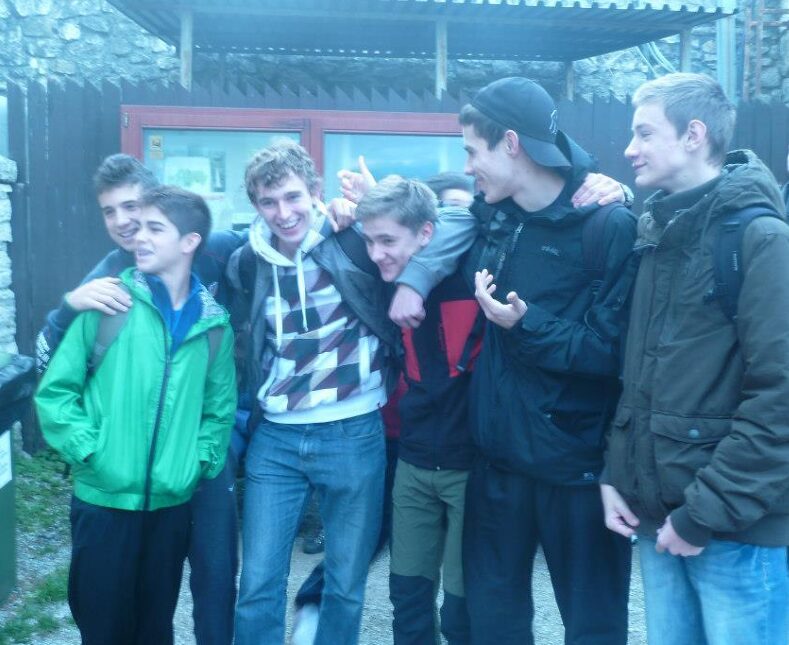
What advice would you give to current GYMES students?
Listen to advice, but make your own decisions. What worked for someone else may not necessarily work for you, and vice versa. Believe in yourself. Success does not come through talent but through long-term hard work. Do not let the opinions of others discourage you from your dreams or make you feel that you are not capable. Learning does not end after school, and in my observation people with long-term determination and discipline are more successful than those who rely only on talent.